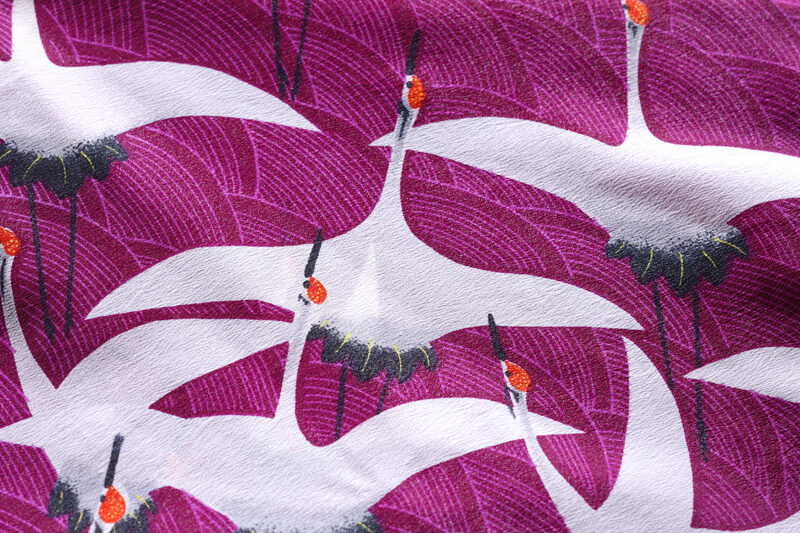
Japanese cranes furoshiki

Photos: © Csigó László

Origin of the word

The word “furoshiki” (風呂敷) derives from the Japanese words “furo” (風呂, bath) and “shiki” (敷, spread cloth or mat). The term originated during the Edo period (1603-1868), when these cloths were commonly used in public bathhouses to wrap and carry clothing and personal belongings.

The use of wrapping cloths, however, dates back much earlier. During the Nara period (710-794), they were known as “tsutsumi”, a word that simply means “wrapping” or “package”. Over the centuries, furoshiki evolved into an integral part of everyday life in Japan, serving a wide variety of practical, aesthetic, and ceremonial purposes.

What is it used for?

Furoshiki is remarkably versatile and can be used for several purposes, including:

Gift wrapping

The most common use. A beautifully tied furoshiki becomes a gift in itself, while also serving as an environmentally friendly alternative to wrapping paper.

Bag

With a single cloth, you can create a practical bag in moments that fits in your pocket when not in use.

Decoration

The cloth can also become a decoration for our home, as it can be used as a tablecloth, wall hanging, or even a cushion cover.

Bento box wrapping

The traditional wrapping method for Japanese lunch boxes, which helps keep the food warm and makes it easy to carry.

Pet carrier

The Japanese often use furoshiki to carry small dogs and kittens as well.

Sizes

A furoshiki cloths are available in different sizes, each ideal for a specific purpose:

SizeUsage
45 × 45 cmFor wrapping small gifts and bento boxes
68-70 × 68-70 cmFor wrapping medium-sized gifts like boxes, books, wine
90-105 × 90-105 cmFor wrapping bigger gifts, preparing bags
Over 105 × 105 cmFor wrapping extra big gifts and preparation of large bags

Materials

Furoshiki cloths are made from a variety of materials, each offering its own advantages:

Cotton

The most common material. It is durable, easy to wash, and holds knots well. It is ideal for everyday use and for beginners. Nowadays, organic cotton furoshiki cloths can also occasionally be found.

Silk

A luxury material for special occasions. It has a beautiful sheen, but it is very expensive and requires more delicate care. When decorated with traditional patterns, it is particularly elegant.

Polyester / neylon

A modern and practical choice. It is water-resistant, easy to clean, and dries quickly. One of its advantages is that it wrinkles very little, if at all.

Rayon

A more affordable alternative to silk. It has a similar sheen and feel, but is easier to handle and more affordable.

Linen

A natural, environmentally friendly material. It is somewhat stiffer at first but softens over time. With its rustic appearance, it is ideal for summer use.

"Chirimen"

Traditional Japanese textured fabric. Due to its distinctive surface, knots hold especially well. At the same time, it is a delicate material and difficult to clean.

Recycled materials

Recycled materials (such as RE-PET) have also become available in recent years. Their advantage is that, through recycling, an item that would otherwise have been discarded is given a new life.

Do you want to learn more?

Come to our workshops and learn the art of furoshiki!

Workshops